

TL;DR:
- Structured feedback enhances grading consistency by following clear criteria and rubrics.
- It improves assessment efficiency and learner outcomes through focused, actionable comments.
- Digital tools and AI can streamline structured feedback, ensuring compliance and faster turnaround.
Feedback is not a formality. Too many CIPD training centres still treat assignment feedback as a brief summary of marks, a few lines confirming whether a learner passed or fell short. That approach misses the point entirely. Structured assignment feedback is a systematic process that applies clear criteria, actionable language, and rubric-aligned commentary to every submission. When done well, it reduces grading variability between assessors, speeds up turnaround times, and gives learners a genuine roadmap for improvement. This guide breaks down what structured feedback really means, why it matters for grading consistency and efficiency, and how your centre can implement it with confidence.
Table of Contents
- Defining structured assignment feedback
- Benefits for grading consistency and efficiency
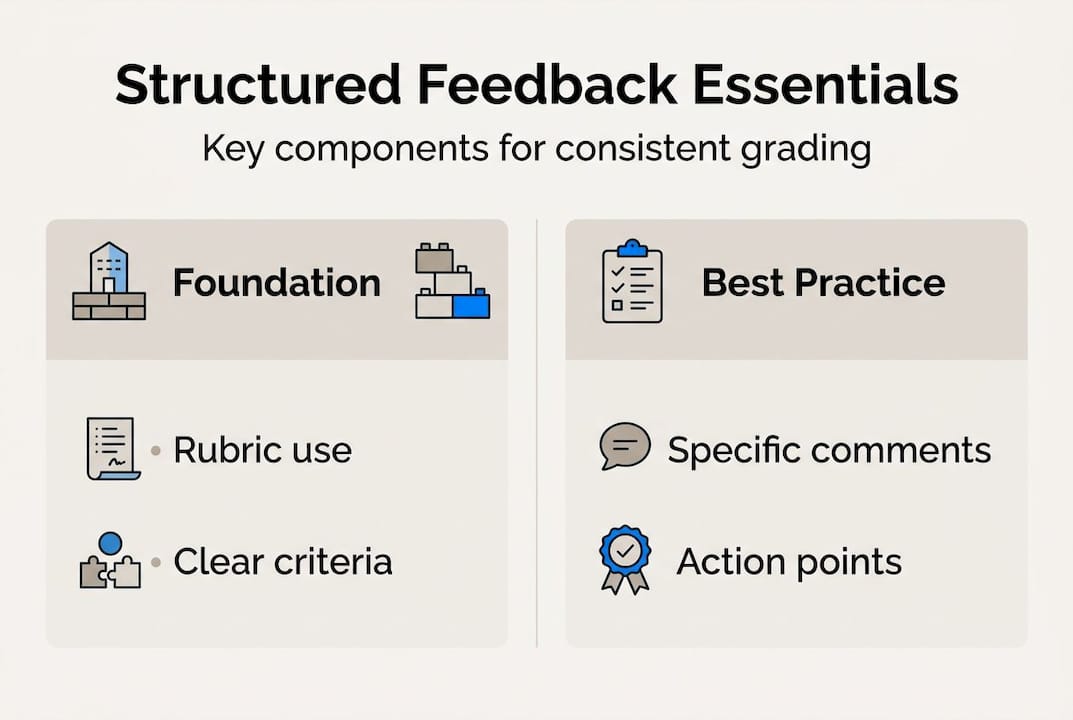
- Key components of effective structured feedback
- Practical implementation in CIPD training centres
- Why structured feedback outperforms traditional marking
- Next steps: streamline your assignment feedback
- Frequently asked questions
Key Takeaways
| Point | Details |
|---|---|
| Structured feedback defined | Structured assignment feedback is a systematic approach that uses clear criteria to improve grading reliability. |
| Enhances grading consistency | Applying rubrics and frameworks reduces subjectivity and errors in assessment processes. |
| Boosts efficiency | Digital and AI tools can speed up feedback generation and standardise comments across assignments. |
| Practical implementation | Training, compliance, and ongoing review are critical for embedding structured feedback in CIPD centres. |
Defining structured assignment feedback
Structured assignment feedback is a formal, criteria-driven approach to responding to learner submissions. Unlike ad hoc feedback, which relies on individual assessors making judgement calls in isolation, structured feedback follows a defined framework. Every assessor uses the same format, the same language conventions, and the same rubric anchors to evaluate and comment on work.
The difference is significant. Ad hoc feedback is subjective by nature. One assessor might focus heavily on referencing, while another prioritises argument structure. The result is inconsistent grades and confused learners. Structured feedback removes that variability by setting expectations upfront.
Key attributes of effective structured feedback include:
- Clarity: Comments are written in plain language that learners can act on immediately.
- Specificity: Feedback refers directly to the assessment criteria and the learner's actual submission, not generic observations.
- Actionable next steps: Every piece of feedback includes guidance on what the learner should do differently or develop further.
- Rubric alignment: Comments map directly to the mark scheme, so learners understand exactly where marks were gained or lost.
In CIPD settings, these attributes are especially important. CIPD qualifications carry professional credibility, and the integrity of the grading process reflects directly on the training centre. As the structured feedback guide outlines, structured feedback provides systematic and actionable recommendations that support both assessor consistency and learner progression.
"Structured feedback is not about writing more. It is about writing the right things, in the right order, tied to the right criteria."
This distinction matters for quality assurance too. When external verifiers or awarding bodies review your centre's marking, they are looking for evidence that feedback is fair, consistent, and traceable to the mark scheme. Structured feedback makes that evidence visible and auditable.
Benefits for grading consistency and efficiency
Structured feedback does more than improve learner experience. It fundamentally changes how your assessment team operates.

Grading consistency is the most immediate benefit. When every assessor follows the same framework, the risk of inter-rater variability drops sharply. Two assessors marking the same submission should arrive at the same grade, or very close to it. Without structure, that alignment is difficult to achieve and even harder to verify.
| Approach | Grading consistency | Turnaround speed | Auditability |
|---|---|---|---|
| Unstructured feedback | Low | Variable | Poor |
| Structured feedback | High | Faster | Strong |
| AI-assisted structured feedback | Very high | Significantly faster | Excellent |
Efficiency gains are equally compelling. Assessors working within a structured framework spend less time deciding what to write and more time applying their expertise. Templates, rubric anchors, and digital tools reduce cognitive load and cut the time spent on each submission. For assessment bodies managing large cohorts, this is a meaningful operational advantage.
Research supports this. Structured feedback improves grading accuracy in educational settings, with centres reporting fewer moderation disputes and faster sign-off cycles when structured approaches are in place. You can explore this further in the grading accuracy review.
The benefits extend to learner outcomes as well. When feedback is clear and actionable, learners are more likely to engage with it, apply it, and improve on resubmission. That reduces the volume of repeat submissions your team needs to process.
Key efficiency gains from structured feedback include:
- Reduced time per submission through standardised templates
- Fewer moderation queries due to consistent grade rationale
- Faster internal verification sign-off
- Improved learner satisfaction scores
For a deeper look at effective feedback methods and how they translate into measurable outcomes, the evidence is clear: structure is not bureaucracy, it is a performance tool.
Key components of effective structured feedback
Knowing that structured feedback works is one thing. Building it into your assessment process is another. Here is a practical breakdown of what strong structured feedback looks like in practice.
- Opening summary: Begin with a brief, neutral overview of the submission. Acknowledge what the learner attempted and the overall standard achieved.
- Criteria-by-criteria commentary: Address each assessment criterion individually. Note what was demonstrated, what was partially met, and what was absent.
- Specific evidence references: Quote or paraphrase specific parts of the submission to anchor your comments. Vague feedback is not useful feedback.
- Mark rationale: Explain clearly why the submission received the grade it did, with direct reference to the mark scheme.
- Actionable development points: Close each criterion section with a concrete suggestion for improvement, framed positively.
- Overall summary and next steps: End with a brief paragraph that consolidates the feedback and outlines what the learner should prioritise going forward.
Rubric integration is the backbone of this process. As assessment feedback tips confirm, rubric integration is essential for consistent assignment feedback across assessor teams.
| Feedback element | Purpose | Common mistake |
|---|---|---|
| Opening summary | Sets context | Too vague or too long |
| Criteria commentary | Links marks to evidence | Generic, not submission-specific |
| Mark rationale | Justifies grade | Missing or unclear |
| Development points | Guides improvement | Absent or superficial |
Language and tone matter too. Feedback should be professional, direct, and constructive. Avoid hedging language that leaves learners uncertain about their standing.
Digital tools are transforming how this process is managed. AI tools can streamline feedback generation, reducing the manual effort involved in drafting criterion-level comments. For centres handling high submission volumes, AI feedback compliance frameworks ensure that automation supports rather than replaces human judgement.
Pro Tip: The most common mistake in structured feedback is writing comments that sound specific but are actually generic. Phrases like "good analysis" or "needs more depth" without referencing the actual submission are not structured feedback. They are filler. Train your assessors to quote or paraphrase the learner's work in every criterion comment.
Practical implementation in CIPD training centres
Rolling out structured feedback across a CIPD training centre requires more than a new template. It needs a coordinated approach that covers systems, people, and processes.
Start with a centre-wide feedback framework. Define the format, language standards, and rubric conventions that all assessors will follow. This document becomes your quality benchmark and your training resource.
Key steps for a successful rollout include:
- Assessor calibration sessions: Run joint marking exercises where assessors grade the same sample submission independently, then compare and discuss. This builds shared understanding of the standard.
- Digital tool integration: Adopt platforms that embed structured feedback templates directly into the marking workflow. This removes the reliance on individual assessors remembering to follow the format.
- Ongoing staff development: Feedback quality should be a standing agenda item in assessor meetings. Review anonymised examples, identify patterns, and address gaps.
- Internal verification alignment: Ensure your IV process specifically checks feedback quality, not just grade accuracy. A correct grade with poor feedback is still a compliance risk.
Compliance is non-negotiable. Compliance in CIPD assessment feedback is vital for quality assurance, and centres that cannot demonstrate consistent, criterion-referenced feedback face real risks during external quality reviews. The assessment feedback compliance requirements for CIPD qualifications are clear, and structured feedback is your most reliable way to meet them.
For evidence of what this looks like in practice, the data on improved assessment outcomes from centres that have adopted structured approaches is compelling.
Pro Tip: Build a feedback audit into your quarterly quality cycle. Sample ten submissions per assessor, score the feedback against your framework criteria, and use the results to target CPD. Monitoring feedback quality is just as important as monitoring grade accuracy.
Why structured feedback outperforms traditional marking
Here is an uncomfortable truth: most traditional marking processes were not designed with consistency in mind. They were designed for speed and convenience. An assessor reads a submission, forms an impression, writes a few notes, and assigns a grade. The problem is that impressions vary. What reads as a strong argument to one assessor may read as superficial to another.
Structured feedback forces assessors to slow down and justify their thinking. That process of justification is where quality lives. When an assessor has to write a criterion-by-criterion rationale, they cannot rely on gut feeling. They have to engage with the evidence in the submission.
The transition from traditional to structured marking is not always comfortable. Assessors who have marked intuitively for years sometimes resist the format, viewing it as bureaucratic overhead. That resistance is understandable but misplaced. The human review benefits of combining structured frameworks with professional expertise are well documented, and the centres that have made the shift consistently report stronger moderation outcomes and fewer appeals.
The future of CIPD grading is structured, digital, and transparent. Centres that invest in that infrastructure now will be better placed to scale, to meet regulatory expectations, and to deliver the learner experience that professional qualifications demand.
Next steps: streamline your assignment feedback
If you are ready to move beyond inconsistent, time-consuming marking processes, EduMark.ai offers a purpose-built solution for CIPD training centres and assessment bodies.
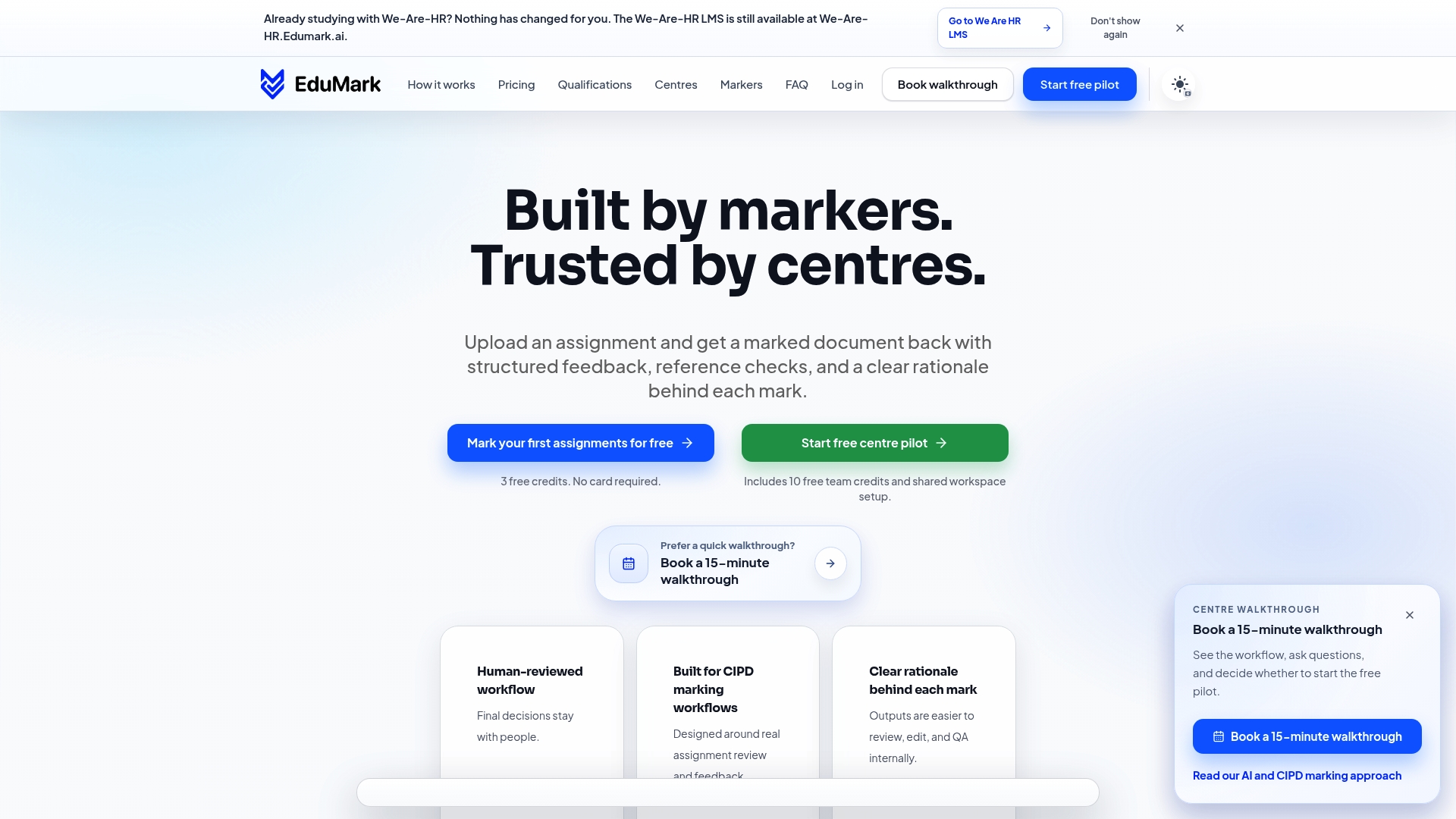
EduMark's platform brings structured feedback into a single, compliant workflow. Assessors upload submissions, and the system generates criterion-aligned commentary, inline comments, and detailed review summaries embedded directly into Word documents. Every mark comes with a transparent rationale, and human oversight is built into every step. With AI-assisted assignment marking designed specifically for CIPD qualifications, your centre can achieve greater consistency, faster turnaround, and full audit readiness without adding to your team's workload.
Frequently asked questions
How does structured assignment feedback improve grading consistency?
Structured feedback applies clear criteria and rubrics to every submission, reducing the subjectivity that causes grade variation between assessors. Centres using structured approaches report fewer moderation disputes, as confirmed by grading accuracy evidence from CIPD settings.
What are the main elements of structured feedback?
Structured feedback includes rubric integration, criterion-specific commentary, clear mark rationale, and actionable development points. As assessment feedback guidance confirms, rubric integration is essential for maintaining consistency across assessor teams.
Can digital tools help automate structured feedback?
Yes. AI and digital platforms can generate and manage structured feedback efficiently, improving turnaround times and supporting compliance. AI tools streamline feedback generation while keeping human review central to the process.
Why is compliance crucial in CIPD assessment feedback?
Compliance ensures that feedback meets the quality and transparency standards required by CIPD qualifications and awarding bodies. Without it, centres risk adverse findings during external quality reviews, as CIPD feedback compliance standards make clear.
Recommended
- Efficient CIPD assignment review: Improve grading accuracy
- Assessment grading checklists for CIPD: boost accuracy
- Structured assessment feedback guide for CIPD educators
- Harness feedback for improved CIPD assessment outcomes
See how EduMark connects learning, assessment and your team.
Explore EduMark →